
Human-first knowledge for planning, sharing, and AI projects
Let your people document. Let your AI understand.
Sujour gives people a clear place to keep notes, docs, wikis, templates, and plans — from trip agendas and family information to team docs and AI workflows. As that knowledge grows, it becomes structured context and reusable dependencies for AI projects.
Notes, docs, and wikis
Templates and playbooks
RAG + CAG context
DAG-ready dependencies
Everyday planning and shared information
Start with everyday planning, coordination, and shared information.
Sujour is useful for the planning and coordination people already do every day: organizing activities for a local group, setting a trip agenda, or sharing important information with family. The same human-first structure that makes planning clearer for people also gives AI integrations better grounding later on.
Community planning
Plan activities for your local organization.
Keep agendas, volunteer notes, event plans, follow-ups, and shared decisions in one place your group can actually use.
Trip planning
Build and share a trip agenda everyone can follow.
Organize dates, checklists, reservations, daily plans, and travel notes so everyone stays aligned before and during the trip.
Family information
Share important family information without losing context.
Keep schedules, care instructions, household notes, important contacts, and key documents in a format that is easy to update and share.
Human-first knowledge workspace
A human-first knowledge base that becomes better AI context.
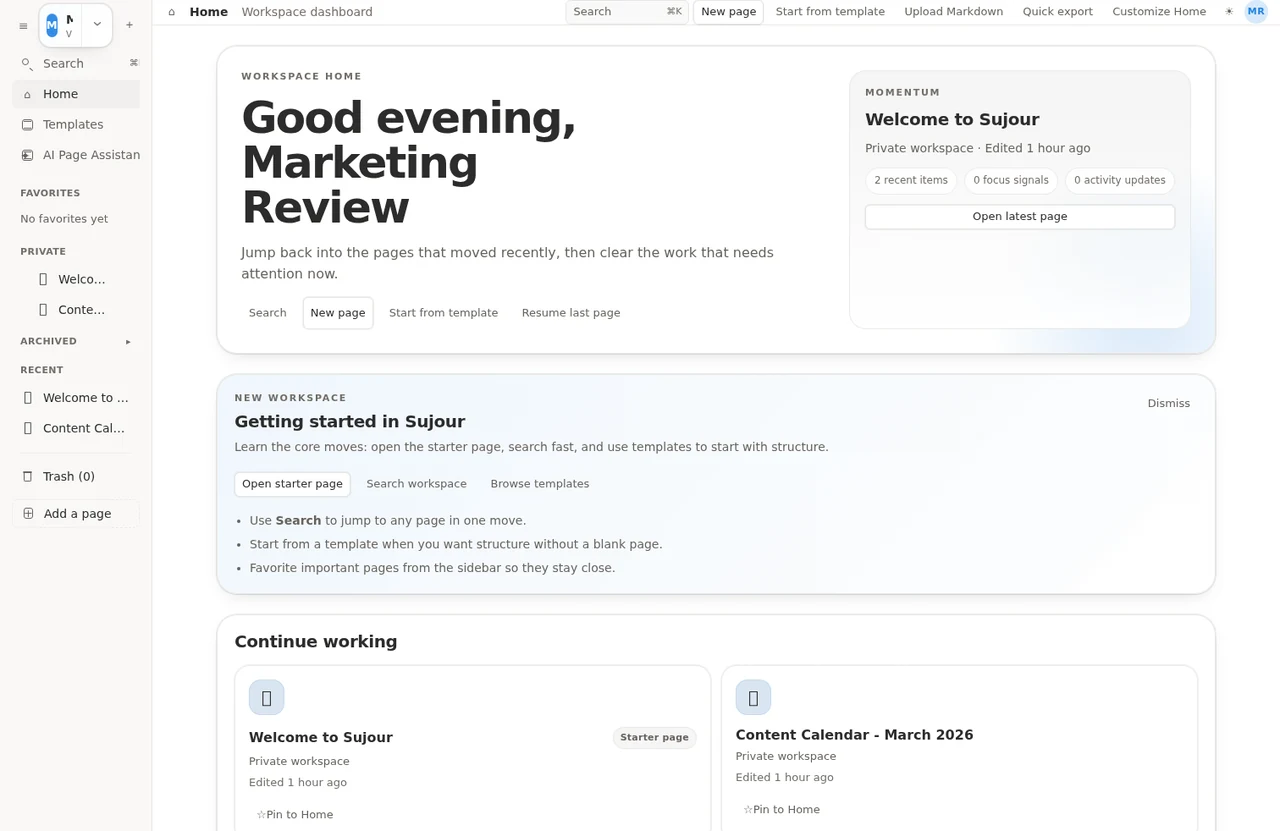
Sujour is built for the documentation AI projects actually depend on: private notes, shared docs, project pages, team wikis, operating playbooks, specs, research, and internal knowledge bases. People can write naturally, organize clearly, and search what matters. As the knowledge grows in structured pages, AI gets the live context it needs.
- Create private or shared pages for specs, research, plans, handoffs, wikis, and operating knowledge.
- Find what you need through search, recent work, and a workspace built around durable pages.
- Keep the same information useful for people first — and available as context for AI workflows.
Templates and dependencies
Turn repeatable work into reusable templates and dependencies.
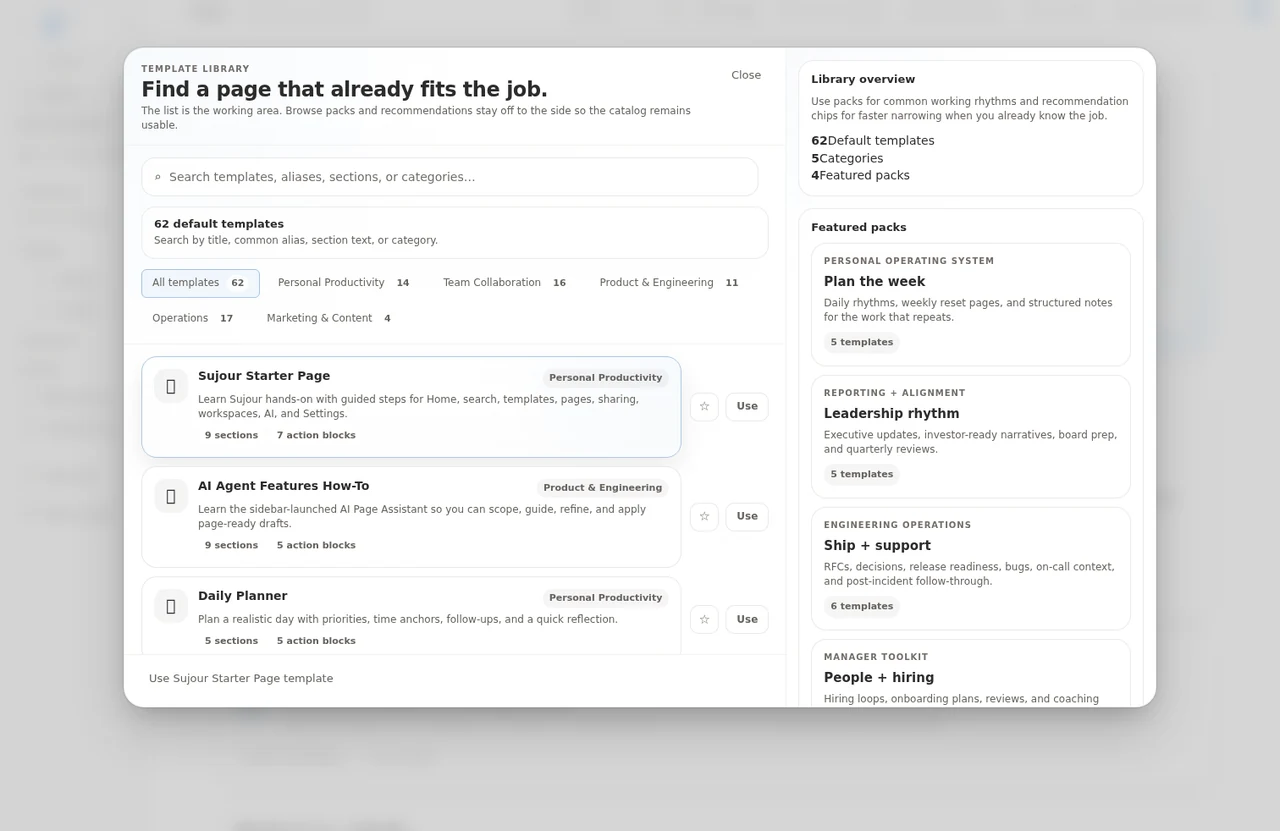
Templates turn one good page into a repeatable system. Use them for briefs, meeting notes, evaluation plans, onboarding, handoffs, operating reviews, and team playbooks. What starts as better structure for people becomes reusable dependency context for the rest of the project.
- Browse 62 default templates across planning, product, operations, marketing, and team workflows.
- Standardize the pages AI projects rely on: briefs, research, reviews, handoffs, retros, and playbooks.
- Give AI more reliable structure for summaries, rewrites, and extracted next steps.
AI-ready context
A better source layer for RAG, CAG, and DAG workflows.
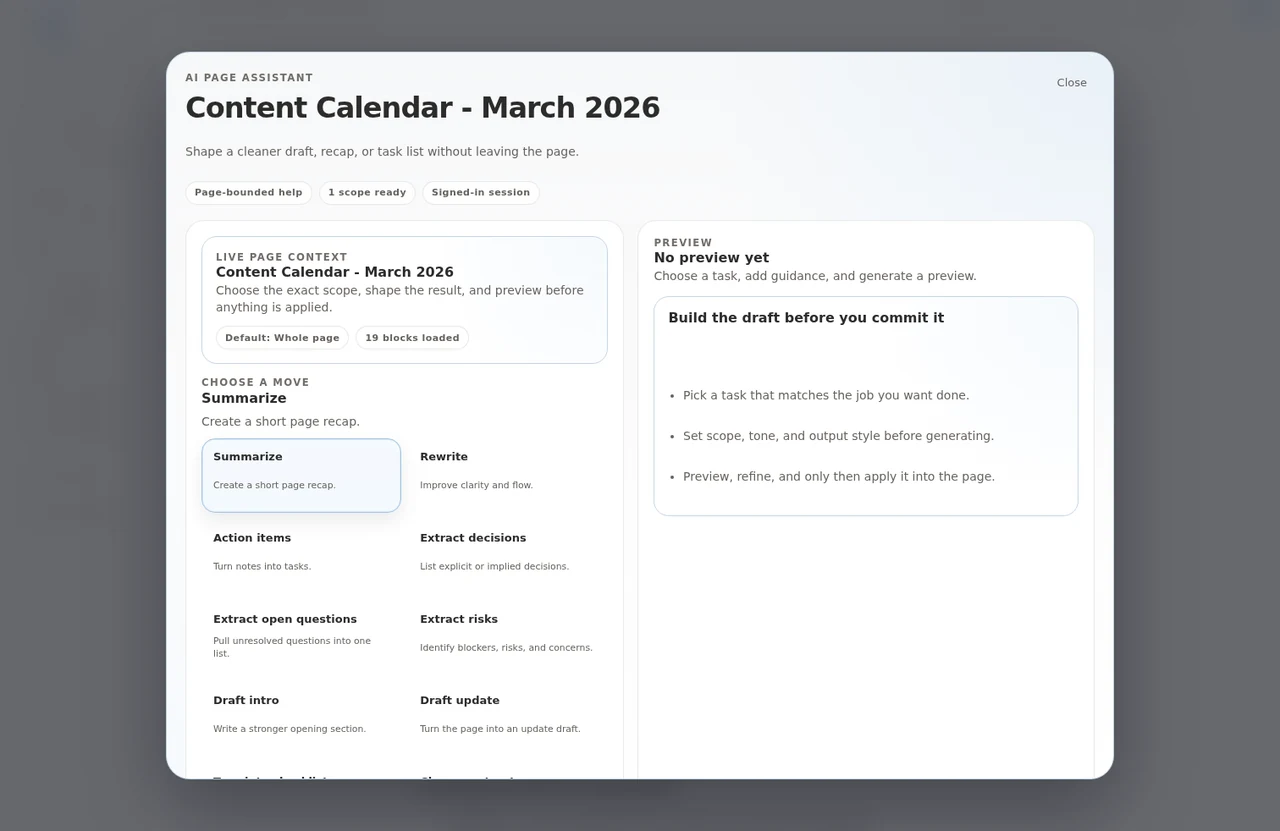
Sujour’s AI Page Assistant works from the live page instead of a blank prompt. That means the same notes, docs, specs, and playbooks your team maintains become grounded context AI can use for recap, rewriting, extraction, and follow-through. Over time, Sujour becomes an AI project knowledge base and human-first source layer for retrieval-augmented generation (RAG), context-augmented generation (CAG), and DAG-based AI integrations.
- Ground RAG and CAG workflows in live pages instead of stale copies.
- Keep scope, dependencies, and source material visible for DAG-based workflows and AI integrations.
- Extract actions, decisions, questions, or risks from real project documentation.
From human docs to AI runtime
One system for the knowledge people keep and the context AI needs.
Whether you’re shaping a prototype, running a startup, or supporting an enterprise initiative, the value is the same: capture project knowledge once, keep it structured, and make it useful to people first — and ready for AI when it matters.
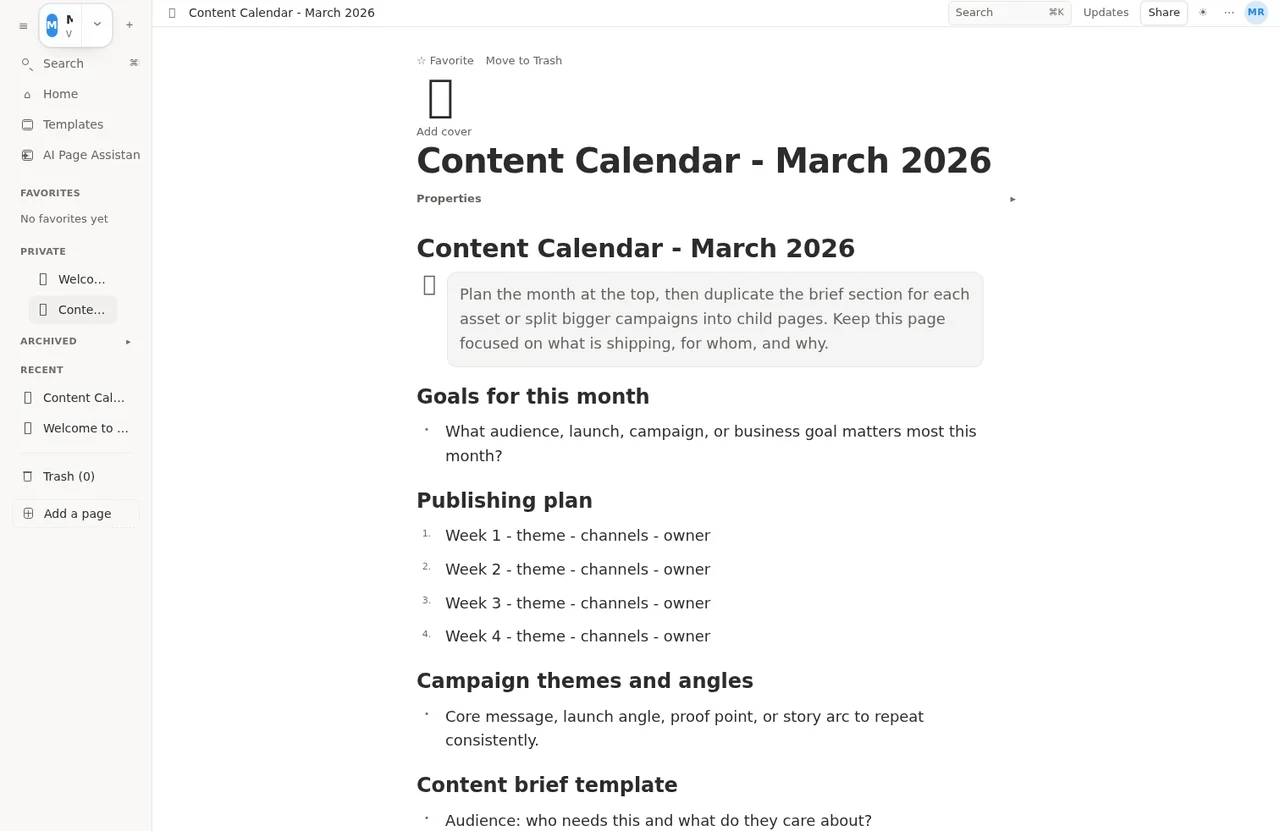
Example: a structured page people can use and AI can reason over
A content calendar is one example. The same pattern works for research briefs, project plans, agent specs, onboarding docs, handoffs, internal wikis, and operating playbooks: one page people can read, edit, and share — and AI can summarize, rewrite, and extract from.
- Humans can scan the page, update it, and collaborate on it.
- AI can understand the headings, lists, and context already on the page.
- Templates keep the pattern reusable as projects grow from one operator to a larger team.
FAQ
How Sujour works for people and AI
What is Sujour?
Sujour is a human-first knowledge workspace for notes, docs, wikis, and playbooks that becomes the knowledge, context, and dependency runtime for AI projects. It gives people a clear place to work and gives AI structured, live context it can actually use.
What do you mean by knowledge, context, and dependency runtime?
Knowledge is the durable pages and docs your team maintains. Context is the structure, current state, and workspace around them. Dependencies are the reusable templates, playbooks, handoffs, and decisions the project relies on. Sujour keeps them together so people and AI can work from the same live source.
Who is Sujour for?
Individuals, families, community organizers, solo builders, operators, founders, product teams, and enterprise groups that want important knowledge to stay useful after the first draft — for both people and AI.
Can Sujour support RAG, CAG, and DAG-based AI integrations?
Yes. Sujour can act as the human-maintained source layer behind RAG, CAG, and DAG-based AI integrations. Your pages, templates, playbooks, and decisions provide the knowledge, context, and dependency structure those systems need to retrieve, reason, route work, and improve the quality of your AI integrations.
How does AI use the knowledge in Sujour?
AI works from the same pages your people write and organize. That gives it visible context to summarize, rewrite, and extract from without separating the output from the underlying project knowledge.
Is Sujour available today?
Yes — the product is live in an invite-only beta at beta.sujour.com.
Do I need an invite code?
Yes. Direct account creation currently requires an invite code. If you do not have one yet, request access below and include your use case.
Request access
Tell us where Sujour fits.
Whether you are planning trips, organizing family information, coordinating a local group, or building AI workflows, tell us what you want to keep structured, searchable, and easy to share.
Common starting points: personal planning, family information sharing, local organization planning, docs, wikis, specs, handoffs, research, content planning, and operating playbooks.